Pilates or yoga: which one should you choose?
They look almost identical from the outside — a mat, comfy kit, a lot of breathing. They train very different things. We compare the goal, the intensity, the price and the class itself, using real data from 1,561 yoga studios and 1,563 pilates studios across the UK.
· Updated · The Studiomaps editorial team

It's the question almost everyone asks before their first class: pilates or yoga? From the outside they look nearly identical — a mat, comfortable kit, low lighting and a lot of breathing. So people pick more or less at random, get the wrong first impression, and never go back.
They actually train quite different things. Studiomaps lists 1,561 yoga studios and 1,563 pilates studios across the UK, and a large share of them run both under one roof. So the question isn't which is better. It's which one suits you right now.
The difference in one sentence
Pilates trains movement control. Yoga trains the relationship between breath, body and attention.
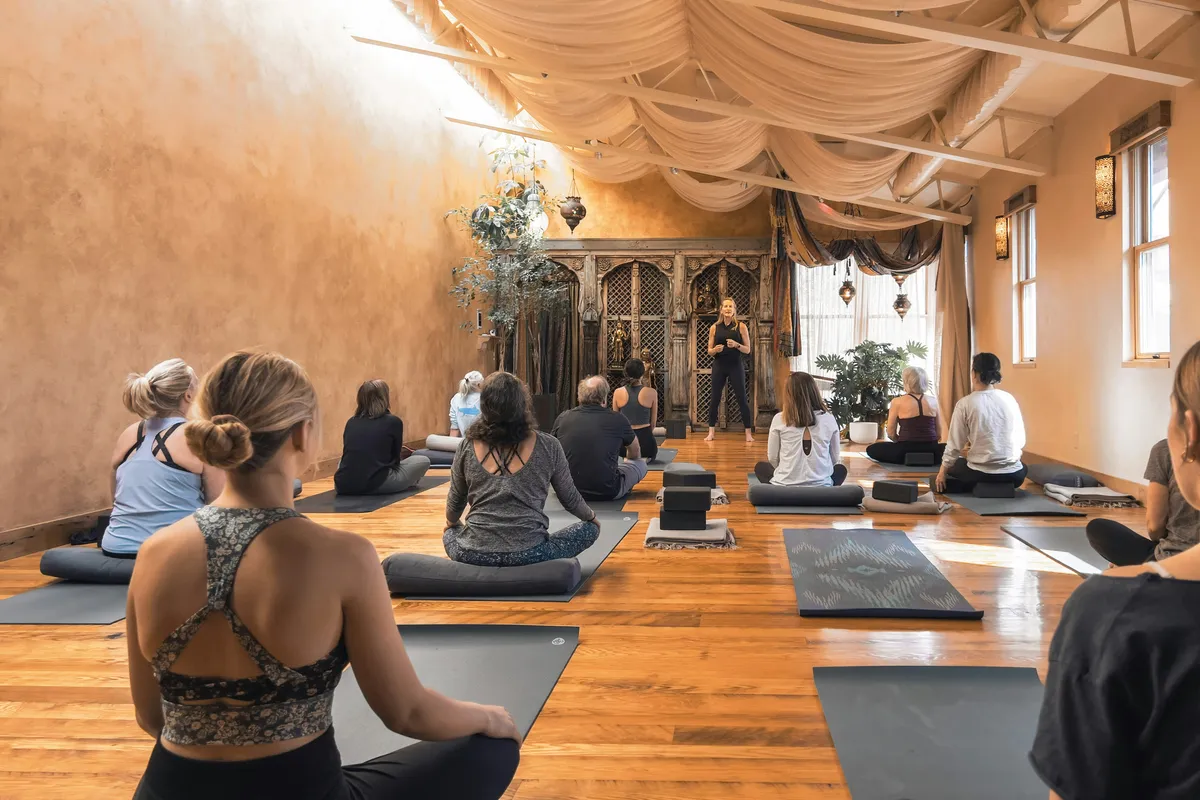
Pilates began as a rehabilitation and postural re-education method: set sequences, counted repetitions, a lot of deep core work, and a healthy obsession with how you perform each movement. Yoga comes from a far older and broader tradition in which the physical practice is only one part — and depending on the style, a class can be gentle and meditative or genuinely hard work.
Almost everything else follows from that.
Compare before you commit
| Pilates | Yoga | |
|---|---|---|
| Main goal | Control, deep strength, posture | Mobility, breath, attention |
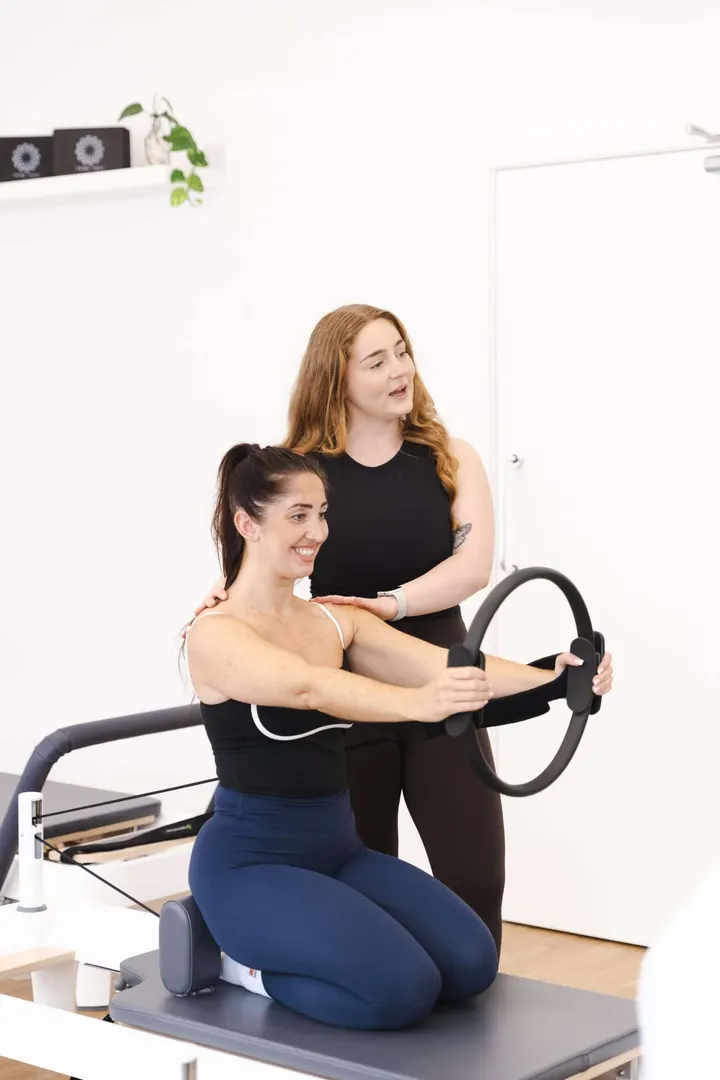
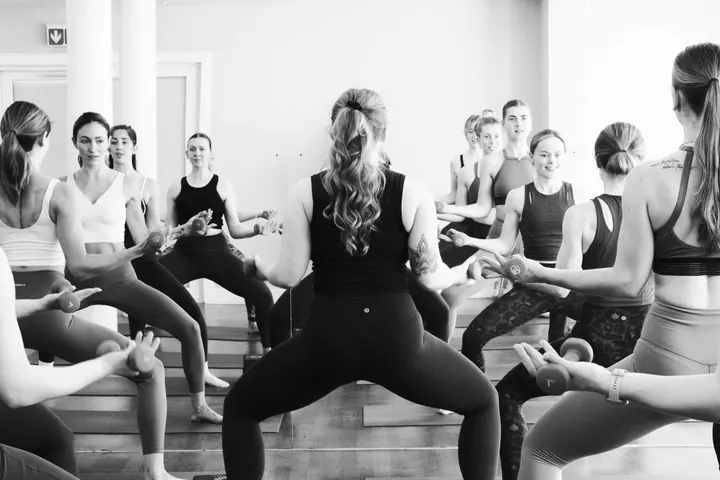
| What a class is like | Set sequences, reps, hands-on correction | Linked sequences, pace varies by style |
| Where you'll feel it | Deep abdominals, pelvic floor, back | Hips, spine, shoulders |
| Kit | Mat, or machines (reformer, cadillac) | Usually just a mat |
| Intensity | Moderate and very consistent | From almost none (yin) to high (ashtanga, vinyasa) |
| Mental element | Focus on technique | Explicit: breath, meditation |
| Good fit if... | You're coming back from injury, you sit all day, you want core strength | You want mobility, to wind down, to sleep better |
Choose pilates if...
- You have lower back or neck pain. This is far and away the most common reason people start. Pilates was built for postural re-education and targets the deep muscles that stabilise the spine.
- You sit down for eight hours a day. Pilates goes straight at what a chair does to you: short hip flexors, a sleepy glute and a stiff upper back.
- You want progress you can measure. The sequences stay the same, so you notice exactly when they start getting easier. That's motivating in a way a varied class isn't.
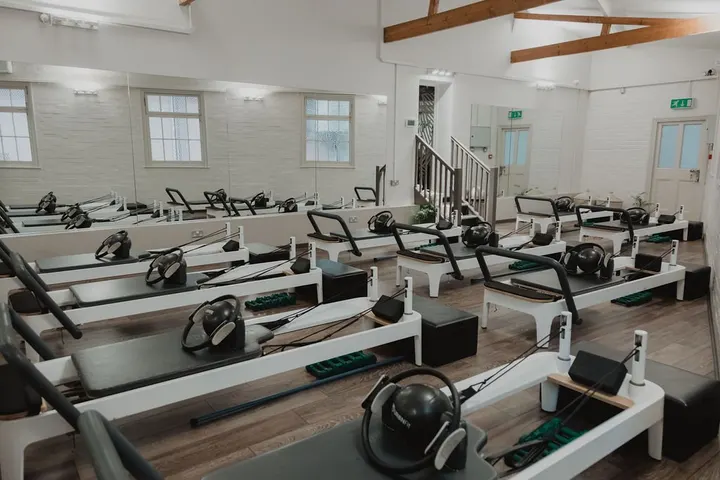
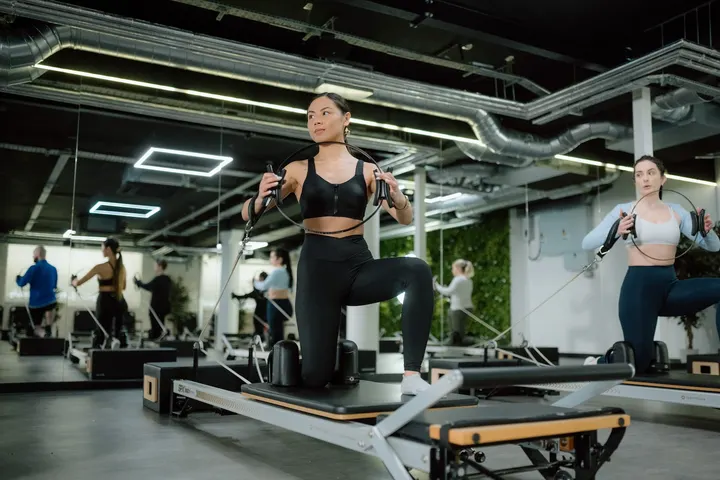
- You're curious about reformer. The machine isn't a gimmick: spring resistance assists a movement you can't yet do unaided, which is precisely why it works so well in rehab. The UK is unusually well served here — 769 studios with reformer, 159 in London alone.
Choose yoga if...
- You're running at full tilt. If you sleep badly and live in a rush, yoga's breath work does something pilates doesn't even aim at.
- You want mobility, not just strength. Hips, hamstrings and spine gain range noticeably quickly.
- You want to pick your own intensity. This is yoga's big advantage: almost everything fits under the name. A yin class is essentially sustained stillness; a vinyasa or ashtanga class will leave you dripping.
- You struggle to stay consistent. Plenty of people last longer in yoga simply because it doesn't feel like "training".
What if the answer is "both"?
Honestly, that's the best combination available: pilates gives you control and deep strength, yoga gives you mobility and calm. They complement each other far more than they compete.
It's also easier than it sounds, because a lot of UK studios run both on the same membership. Some of the best-rated:
- Embrace Wellness Studio — Manchester, 5.0 from 444 reviews (also reformer)
- Tribe Leith Walk — Edinburgh, 4.9 from 368 reviews
- Tribe New Town — Edinburgh, 4.9 from 233 reviews (also reformer)
- Collective Pilates, Notting Hill — London, 4.9 from 219 reviews
- Energy for Life — Brighton, 5.0 from 209 reviews
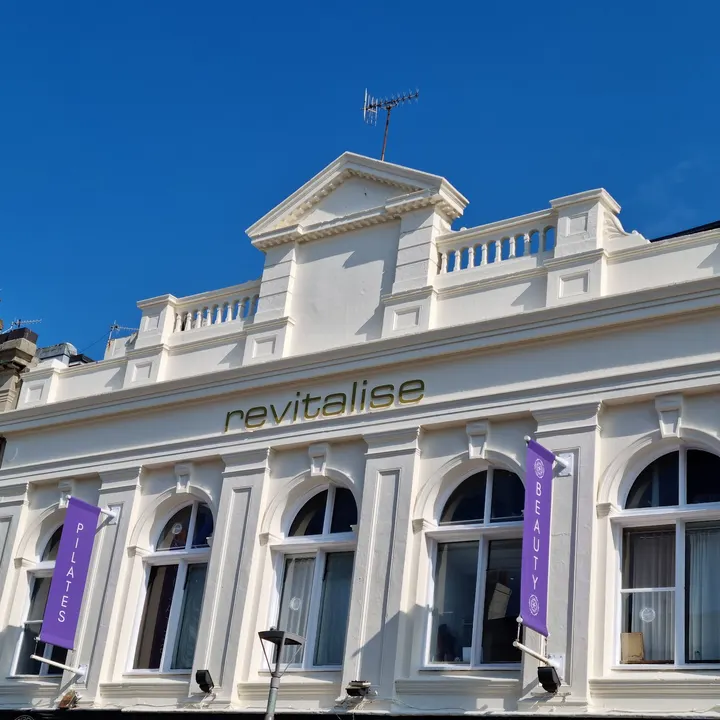
- Revitalise — Hove, 4.9 from 202 reviews
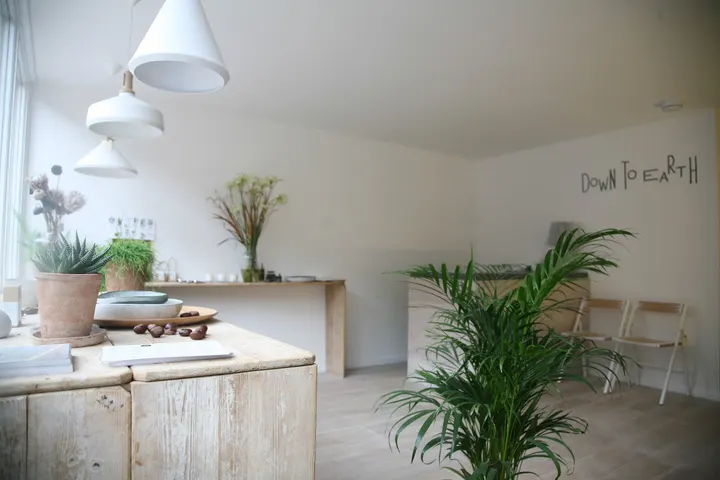
- Down to Earth, Tufnell Park — London, 4.9 from 185 reviews
- Core Clapton — London, 4.8 from 183 reviews
- Tempo 301, E1 — London, 5.0 from 182 reviews (also reformer)
- Re:Connect Studio — London, 4.8 from 174 reviews
- Bay-Yoga Studio — Leighton Buzzard, 5.0 from 174 reviews
- Rise — Plant Kitchen + Movement Studio — Malvern, 4.9 from 159 reviews
If you're torn, start at one of those: you try both disciplines without paying two memberships.
What it costs to start
Prices vary a lot by city and format, but the patterns are consistent across UK studios:
- Drop-in class: typically £15–£30. Reformer and heated classes sit at the top of that range.
- Class packs (usually 10): the most common format, roughly £120–£200.
- Unlimited monthly: commonly £80–£150, with reformer-led studios higher.
- Intro offer: most studios run a discounted first class or a two-week starter pass. That's the right way to decide.
One practical note: reformer almost always costs more, because classes are capped at six to twelve people and the equipment is expensive. If budget is the deciding factor, mat pilates gives you most of the benefit at a fraction of the price.
How to choose without getting it wrong
- Don't judge on a single class. In yoga especially, the style and the teacher change the experience completely — two classes at the same studio can feel unrelated.
- Say you're a beginner when you book. A good studio will adapt and correct you. If they don't, it isn't the right studio.
- Check the class size. In pilates, and especially reformer, it matters more than the interiors do.
- If you're coming back from injury, say so in advance. Some studios have physiotherapists on staff — that's the sensible option.
Start in your city
Where there's most to choose from right now:
- London — 349 yoga studios and 251 pilates studios
- Manchester — 38 yoga and 21 pilates
- Glasgow — 28 yoga and 20 pilates
- Bristol — 28 yoga and 27 pilates
- Birmingham — 18 yoga and 15 pilates
- Edinburgh — 17 yoga and 19 pilates
- Leeds — 24 pilates studios
Already leaning one way? Have a look at the best reformer pilates studios in London.