Reformer Pilates for beginners — what to expect at your first class
What a reformer machine actually does, how it differs from mat Pilates, what your first class feels like, and where to try it across the UK — with real intro offers.
· Updated · The Studiomaps editorial team
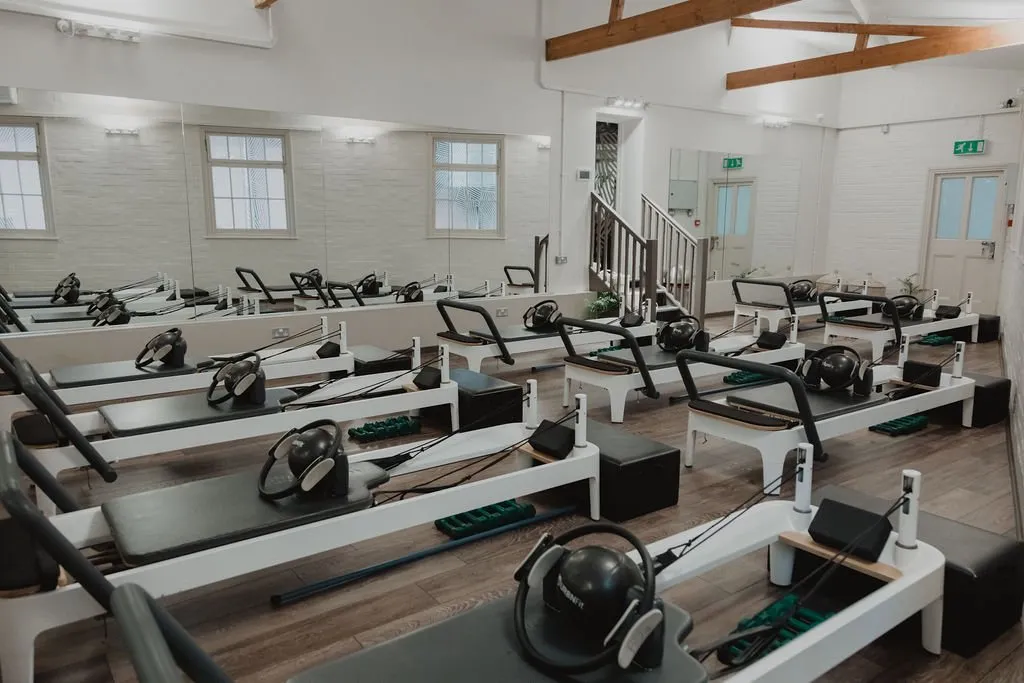
Reformer Pilates has quietly become one of the UK's fastest-growing boutique workouts. On Studiomaps alone there are now 174 reformer studios in London, 15 in Bristol, 14 in Liverpool and 11 in Glasgow — and new studios open monthly. If you've never been on the machine, here's exactly what to expect.
What a reformer actually is
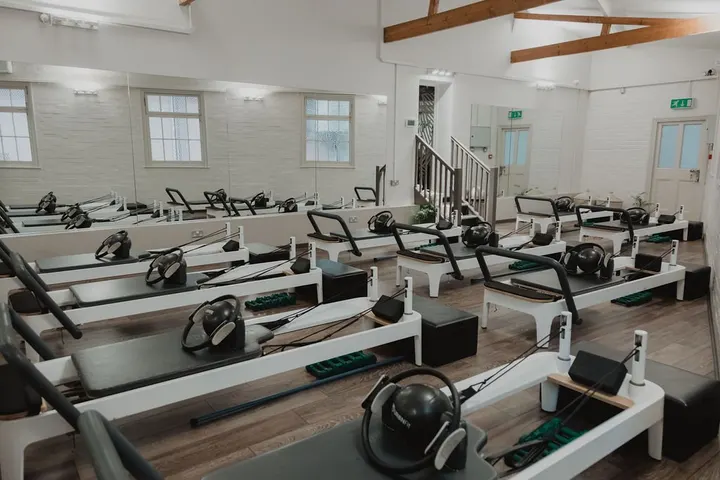
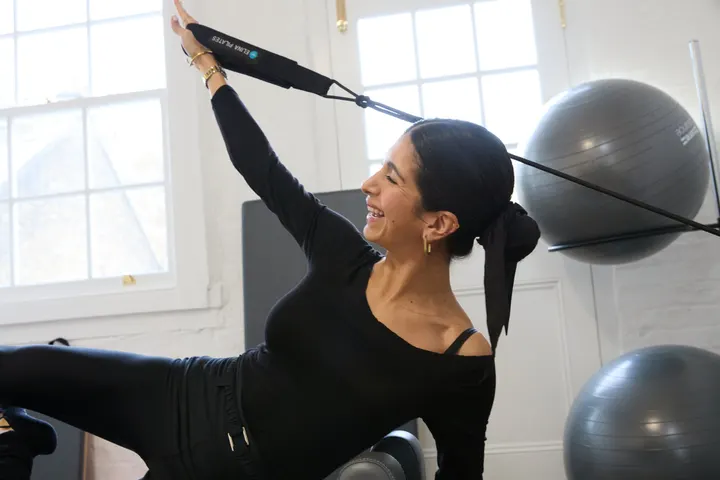
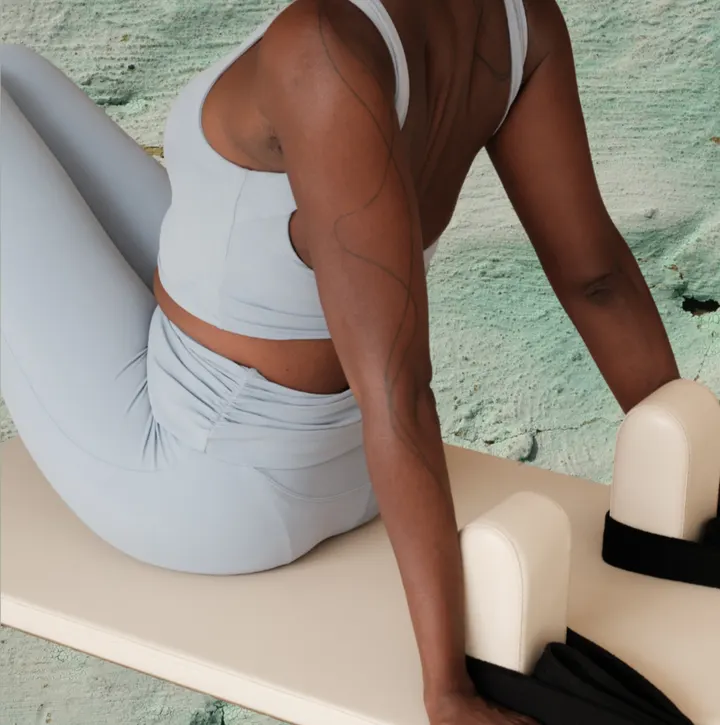
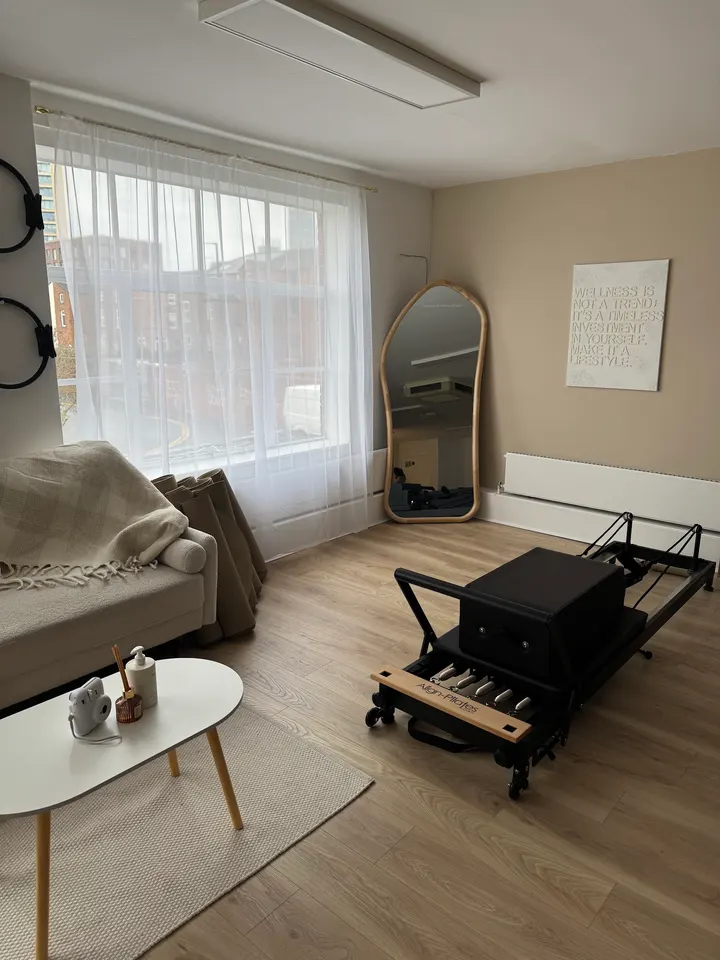
A reformer is a bed-like frame with a sliding carriage, adjustable springs, straps and a footbar. The springs do two jobs at once: they resist you when you push and assist you when an exercise needs support. That's why the reformer is — counterintuitively — one of the most beginner-friendly ways into Pilates, while still challenging people who've practised for years.
Reformer vs mat: the real difference
Mat Pilates uses only your body weight, which makes it deceptively hard on deep core stability. The reformer grades the load precisely: springs can make an exercise harder or easier, and the moving carriage gives you instant feedback — if it judders, your control has room to improve. Beginners usually find the reformer more guided and less frustrating. If you're still weighing up which discipline to start with, read our comparison: Pilates or yoga — which should you choose?
Your first class, step by step
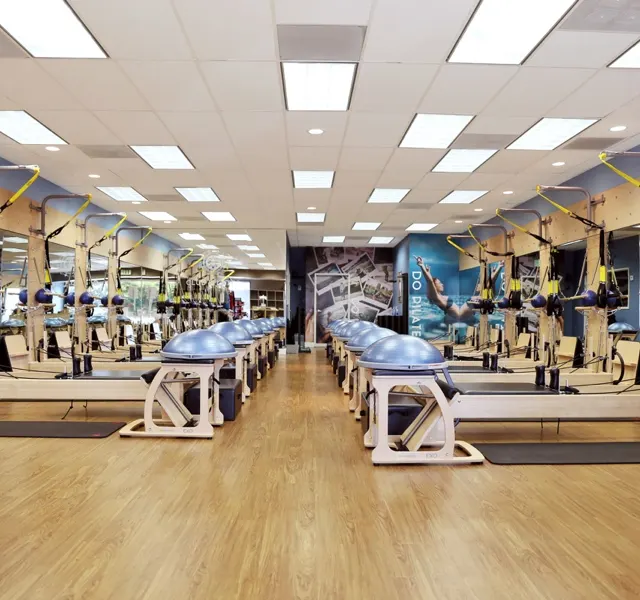
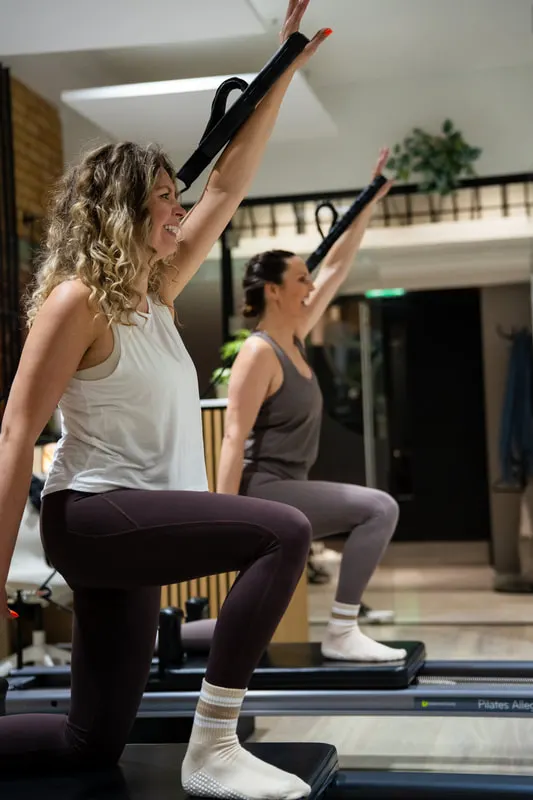
Arrive 10–15 minutes early so the instructor can show you the machine, set the carriage for your height and explain spring settings. A typical class runs 45–55 minutes in small groups — boutique studios usually cap at 8–12 beds precisely so everyone gets corrections. Expect constant core work, legs shaking during footwork, and next-day soreness in muscles you didn't know existed. That's the method working.
Where to try it
These studios are among the best-rated reformer options in the country, all rated 4.8 or higher:
In London, Tempo 301 (4.8, 286 reviews) runs a signature intro of 3 classes for £36; Boxx (4.9, 263 reviews) offers a first reformer class from £15; Collective Pilates in Notting Hill (4.9, 219 reviews) does 2 intro classes for £35; Club Pilates Bankside (4.8, 212 reviews) includes 3 group intro sessions; and Absolute Studios (4.9, 182 reviews) offers 3 classes for £49. Studio East School of Yoga (5.0, 137 reviews) runs both mat and reformer intro offers.
Outside the capital, Soul Pilates in Bristol (5.0, 229 reviews) offers 3 reformer classes in 2 weeks as an intro, and Embrace Wellness Studio in Manchester (5.0, 444 reviews) is one of the highest-rated reformer studios in the North West.
For a deeper dive into the London scene, see our guide to the best reformer Pilates studios in London.
What it costs — and how to start cheap
A single group class runs £15–£35 depending on city and studio; class packs of 5–10 bring the per-class price down meaningfully. The smart way in is an intro offer — nearly every reformer studio has one, because they know the first three classes are what hooks people. You can browse current first-timer offers on the offers page.
Common beginner mistakes
Comparing yourself to the next bed over. The reformer adapts to every body through spring settings — someone carrying more load next to you means nothing. Your only useful benchmark is your own control, class by class.
Holding your breath. The number-one first-timer habit. Breath is part of the method: exhaling on effort recruits exactly the deep musculature the reformer is trying to wake up. If your instructor reminds you three times a class, you've picked a good studio.
Skipping the intro classes. Beginner sessions teach you to set up the carriage, read spring tension and position yourself. Jumping straight into open classes works, but you'll progress more slowly and with more frustration.
Expecting results in a week. The method's classic promise — feel the difference in ten sessions, see it in twenty — remains an honest guide to expectations. Weekly consistency beats any short burst.
How reformer fits alongside other training
Reformer pairs unusually well with everything else. Runners and cyclists use it for the postural and core work those sports never provide; lifters use it to expose and fix asymmetries; desk workers use it as targeted counter-programming for hips and thoracic spine. If your week only fits two studio sessions, reformer plus one cardio activity covers a surprisingly complete base.
Three tips for your first month
First: choose small classes even if they cost slightly more — the technique you build in your first ten sessions determines everything after. Second: consistency beats intensity; two classes a week for a month will change your posture more than a five-class binge followed by three weeks off. Third: try two or three studios on an intro offer before committing to a pack. If yoga is also on your shortlist, our London yoga studio guide covers the other side of that decision.